
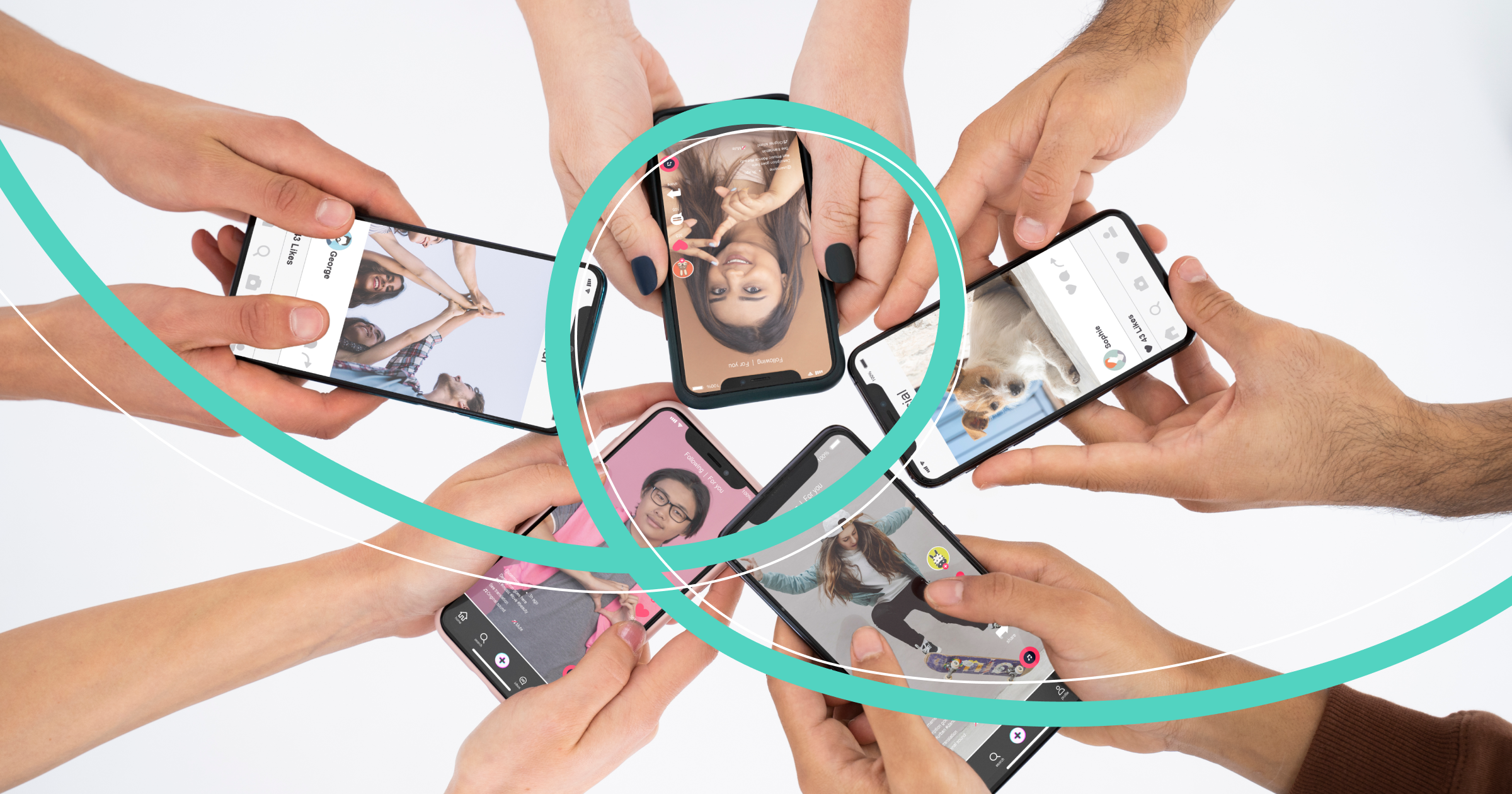

He entertains, educates, brings together, and sells. It's all about content. Let's figure out what content can be and how to use it on social networks.
What are the content formats?
It seems like they've always been around, but VKontakte and Twitter appeared in 2006. The first photo in Instagram* was published in 2010. And Reels and Shorts only appeared in 2021! Every year, new formats for audience interaction appear on social networks, and it can sometimes be hard to keep up with the trends. Nevertheless, the main forms and types of content remain the same, albeit with some modifications.
Depending on how followers perceive content, we can distinguish several key formats.
 Photographer: Judit Peter: https://www.pexels.com/ru-ru/photo/macbook-1766604/
Text
These are articles that highlight problems and provide answers to important questions, social media posts, and cases about personal experiences of a person or company. This also includes interviews, reviews, and more.
The shortest posts are on Twitter: only 280 characters. In other social networks, they can be up to 1500 characters. Articles, instructions, cases can reach 15,000 characters.
Video
The most popular format today. It includes any videos: from shorts and screencasts to reviews and interviews. The shortest videos last about a minute: stories, shorts, reels. But there are other formats as well. By the way, 96% of users prefer to watch educational videos when they want to learn more about a product or service.
Audio
According to RAEK (Russian Academy of Electronic Commerce), in 2023, about 10 million people actively listened to podcasts: 12% daily, and 41% several times a week. Multitasking is becoming an increasingly attractive idea for us: it seems that if you do several things at once, your productivity will increase. Therefore, most people combine routine tasks with listening. For example, they listen to educational podcasts while driving or running, and podcasts about art and culture during cleaning.
A podcast is similar to a radio broadcast, where one or more hosts discuss a topic. But unlike radio, a podcast exists in recording, so you can listen to it anytime. The true-crime genre is particularly popular lately.
Graphic
The graphic format includes illustrations, memes, anime, comics. It also includes graphics, diagrams, and even screenshots.
Fun fact: the first meme that gained popularity on the RuNet was created in 2006: it's "Preved!" Now the average lifespan of a meme today is about four months.
Interface
Push notifications, menus, contacts, pop-up blocks, and more.
Digest
A digest is any compilation. For example, a playlist with new releases, top best articles of the month, a post with a selection of links to materials on a specific topic.
Interactive
A popular format that includes various tools. They allow you to actively interact with the audience. This includes quizzes and tests, chatbots, online streams.
User-generated
UGC (user-generated content) is content created by the followers themselves. For example — reviews, comments. Photos or videos of a product, a description of its advantages and disadvantages, comments on a hot topic — all of this builds more trust when the author is an ordinary user.
It should be noted that each format in its pure form is not encountered very often. Much more often, different formats of content harmoniously combine with each other. For example, a social media post usually consists of text and illustration, a video may be accompanied by subtitles or a thesis transcript, and so on.
Content substance
Content substance can vary from entertaining to advanced scientific articles and largely depends on the format. Some materials are designed to entertain or motivate the audience, others — to encourage active actions (for example, purchasing), and others have an informational or educational nature. Let’s look at them in more detail.
 Photographer: Liza Summer: https://www.pexels.com/ru-ru/photo/6347919/
Informational content
How to lose weight after the holidays? Where to find sources of inspiration for new posts? How to choose a laptop? Millions of different questions are answered by informational content. Facts, benefits, interest — informational content does not encourage shopping. It benefits the reader, provides food for thought, and allows them to draw their own conclusions.
Informational content includes:
- news;
- research;
- product or service reviews;
- interesting facts and statistics;
Entertaining
This type of content is incredibly in demand: all of us sometimes want to relax, have fun, and spend time with interest. Entertaining content firmly holds the user's interest. Perhaps that’s why it's so popular not only among bloggers but also in business accounts?
Entertaining content includes:
- memes;
- jokes;
- comics;
- tests;
- horoscopes and fortune telling.
Engaging
Engaging content is similar to entertaining content but has an important difference. Its goal is to make contact and get feedback from the audience.
Engaging content includes:
- games, riddles;
- contests, drawings;
- polls, as well as answers to audience questions;
- marathons;
- broadcasts;
- workshops;
- tests.
User-generated
As already mentioned, user-generated content is created by the audience itself. Users can leave reviews with photos or videos, suggest posts, and ask questions. Note: reviews from real buyers are trusted much more than advertising or product descriptions. And the opinion of 'marketer Oleg' from Tmutarakan in the comments will be perceived almost on par with the opinion of a media marketing guru.
User-generated content includes:
- reviews with text, photo, and video;
- user reviews and photos with the product;
- audience questions;
- suggested news.
Sales content
Unlike the informational, sales content not only tells about a product or service but also encourages purchasing.
Sales content includes:
- newsletters;
- commercial offers;
- lead magnets;
- cases;
- posts announcing sales and links.
Viral content
Viral content is what suddenly becomes popular, often absolutely randomly. It spreads quickly, picked up by a large number of people — and soon, you see it everywhere! It can be anything — a photo, video, or challenge.
The content that typically goes viral includes:
- videos;
- flash mobs;
- challenges;
- tests;
- compilation articles.
Trends of 2024
In the world, nothing is more fickle than trends: they can change not just year to year, but every month. To not lose audience interest, you need to watch what they like and quickly respond by creating relevant content. Here are some trends that will likely remain relevant in 2024.
Artificial Intelligence
 Photographer: ThisIsEngineering: https://www.pexels.com/ru-ru/photo/3861969/
Of course, artificial intelligence will gain immense popularity, with news about it flooding feeds in 2023. Now, neural networks are actively used in various fields: they help create music, draw paintings, write music, edit photos, and you can even interact with artificial intelligence almost like a real person and even find love.
Podcasts
 Photographer: Christina Morillo: https://www.pexels.com/ru-ru/photo/1181659/
The audio format with an extensive list of topics is also gaining popularity. Most people today lack time, and podcasts are great because you can listen to them while performing other tasks. For example, during cleaning, cooking, jogging, or commuting.
Podcasts are like a radio show where one or more hosts discuss a topic. But unlike radio, a podcast exists in audio form, so you can listen to it anytime. True crime podcasts and recordings where interlocutors have different points of view on the discussed topic have become especially popular recently.
Short Vertical Videos
 Photographer: Ivan Samkov: https://www.pexels.com/ru-ru/photo/7676492/ Brief, quick, abundant — this is the format most users prefer to watch videos on social networks. Short videos can be watched during breaks between studies or on public transport on the way to work. Often these are funny videos not more than a minute long, but they can also be snippets from interviews and reviews or educational content.
Short videos have an important advantage: only a phone is needed for filming, along with minimal editing.
Use Cases
 Photographer: George Milton: https://www.pexels.com/ru-ru/photo/6953993/
Literally translated as "usage cases" from English. The essence of a use case is that a user tells about the advantages and disadvantages of a product, how it helped (or did not help) solve a problem.
Nearly anything can be the subject of a review: cosmetics, delivery services, or internet services. Other users, seeing a use case with a product they are interested in, will make conclusions regarding their purchase.
Sincerity
 Photographer: Blue Bird: https://www.pexels.com/ru-ru/photo/7243156/
People are more drawn to those who are not afraid to show their mistakes, speak frankly, and openly express their emotions. "Sincere" content invariably has a response, so do not hesitate to be natural with your audience if you want to earn trust and receive feedback. Live broadcasts and vlogs with minimal editing and without a pre-planned script almost always find a response and become popular.
Collaborations
 Photographer: RDNE Stock project: https://www.pexels.com/ru-ru/photo/7414003/
Collaborations, or joint publications by multiple brands or bloggers, have firmly entered the trend and are not going to leave it. Collaborative work, for example, between two brands, a brand and a personality, or two famous people, benefits both parties: it increases reach, attracts a new audience, and boosts sales.
For example, the jewelry brand Sokolov created an exclusive collection with Disney dedicated to the cartoon "Frozen". S7 and RUBAN - a travel clothing collection. "Samokat" and the inclusive workshops "Simple Things" released a collection of handmade dishes.
Often, podcast hosts invite guests for discussions, who are knowledgeable about a topic and can offer an alternative view on a problem.
Different Goals — Different Content
Depending on the goals you set, you need to use different content formats. For example, long reads are completely unsuitable for social media post formats, and memes are unlikely to be appropriate on a serious company's website.
Social Networks
Here it’s best to publish content that doesn’t require a lot of time to read or view. A short video or text, a funny picture, a simple poll — anything that can engage the user, stimulate a desire to learn more about your product.
Websites
Unlike social networks, where a person may come across a post accidentally, websites are searched by users already interested in your product. Therefore, websites welcome articles, user cases, and research.
Newsletters
Newsletters are useful to clients interested in news about products and services. Newsletters can include educational materials, news briefings, advertising, and more.
How to create effective content
To create effective content, follow a few simple recommendations.
 Photographer: Kindel Media: https://www.pexels.com/ru-ru/photo/7688336/
Identify your target audience
First and foremost, you need to determine who your content is aimed at, what needs and pains your target audience has. If your posts, newsletters, and cases correspond to these needs, they will not echo in emptiness, but immediately reach interested users.
Determine the delivery
Use different formats: even people within the same target audience may have different interests and perceive information differently. Moreover, the same format may quickly become tiresome. Also, remember that different social networks still have a 'specialization': VKontakte is perceived as a universal social network, Telegram as a news one, YouTube as a video content platform, Facebook specializes in business content, Instagram and TikTok on entertainment.
Analyze
Publish content and track audience reaction. If your chosen approach suddenly stops working, and views and interactions decrease, it might be worth changing your strategy.
Careful thought-out delivery, variety of formats, sincerity, and openness — all of these are necessary to interest your subscribers. Follow the trends, listen to the inner voice, and marketers — and your social networks and websites will work for you!
* The activities of Meta Platforms Inc and its products Instagram and Facebook are banned on the territory of the Russian Federation/